Will Your Wilson County, TX Homeowners Insurance Pay for Hail Damage, and Who Decides?
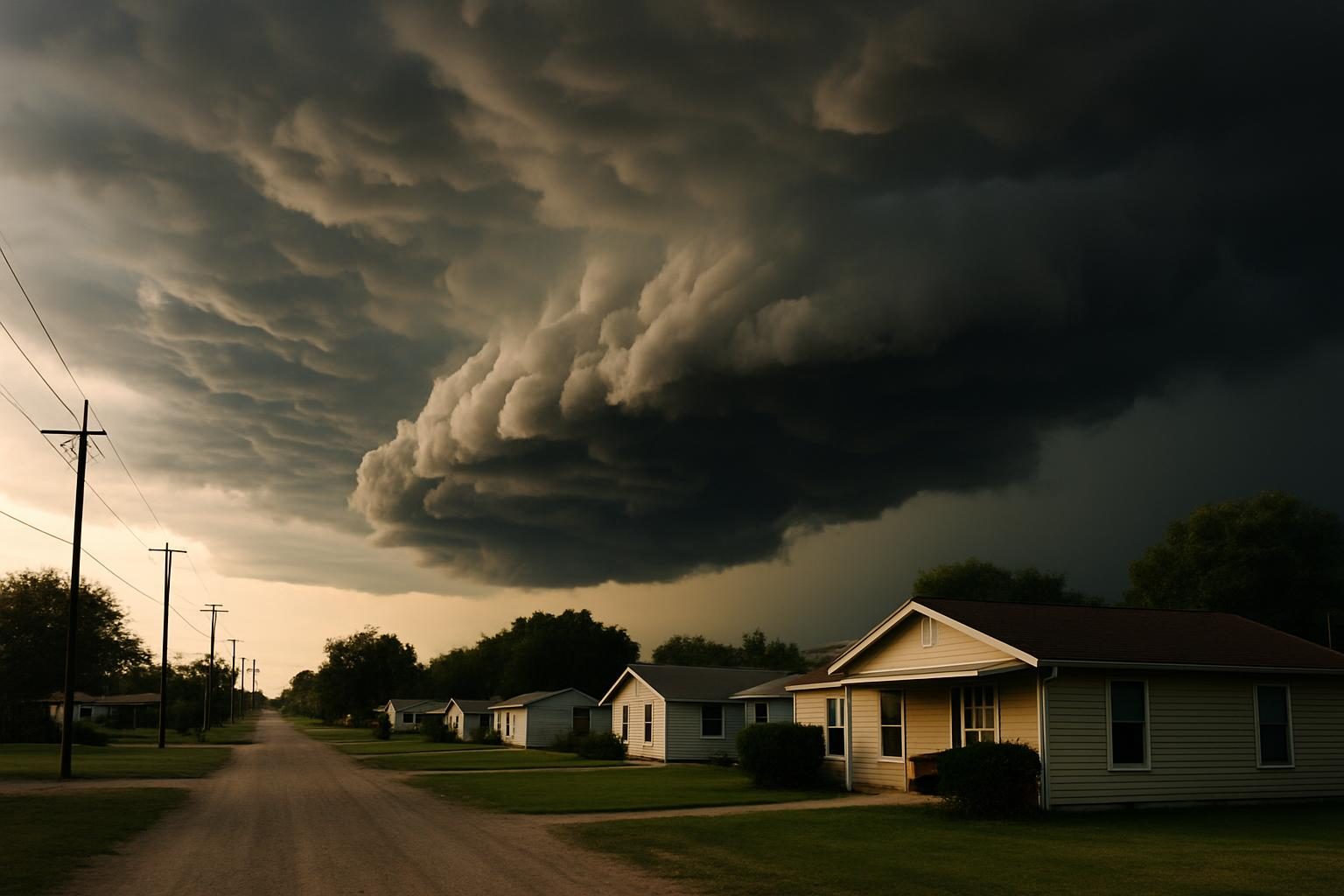
The FEMA National Risk Index rates hail risk in Wilson County as Relatively Moderate, higher than 88.3% of U.S. counties. The county has 17,345 occupied homes (U.S. Census) and 16 FEMA fire, flood, hurricane, severe ice storm and severe storm disaster declarations, the most recent on July 18, 2026. Knowing what your policy covers before a storm hits is the cheapest protection you will ever buy.
Wilson County Risk Profile
Overall risk: Relatively Low, higher than 75.5% of U.S. counties
| Hazard | Rating | Score (percentile) |
|---|---|---|
| Wildfire | Relatively Low | 71.7 |
| Riverine Flooding | Relatively Moderate | 84.4 |
| Tornado | Relatively Moderate | 78 |
| Hail | Relatively Moderate | 88.3 |
| Strong Wind | Relatively Low | 48.8 |
| Lightning | Relatively Moderate | 66.6 |
Source: FEMA National Risk Index. Scores are percentile ranks among all U.S. counties: a score of 90 means higher risk than 90% of counties. Ratings are for the county as a whole.
Wilson County at a Glance
- County seat
- Floresville
- Largest towns
- Floresville, Poth, Stockdale, La Vernia, Elmendorf
- Occupied homes
- 17,345
- Flood insurance (NFIP) policies in force
- 173
- FEMA disaster declarations
- 16 (most recent July 18, 2026)Counts fire, flood, hurricane, severe ice storm and severe storm declarations
Sources: U.S. Census Bureau (American Community Survey), FEMA NFIP policy data, FEMA disaster declarations.
Does homeowners insurance cover hail damage in Wilson County, TX?
Yes, hail is generally a covered peril on a standard homeowners policy, but most Texas policies attach a separate wind and hail deductible that is different from your main deductible. Find that deductible on your declarations page now, because it decides how much of a roof claim you actually collect.
What Wilson County’s hail, tornado, and flood ratings mean for your home
Read the percentile correctly. Hail risk in Wilson County is Relatively Moderate, higher than 88.3% of U.S. counties. Tornado risk is also Relatively Moderate, higher than 78% of U.S. counties, and riverine flooding sits at Relatively Moderate, higher than 84.4% of U.S. counties (FEMA National Risk Index).
What the numbers cannot tell you. They are county-level. They do not say whether your street in Floresville, Poth, Stockdale, La Vernia or Elmendorf floods, or whether your roof is old enough to fail under hail. They also don’t dictate what your policy will pay.
Do not skip flood. FEMA’s NFIP shows 173 flood insurance policies in force in Wilson County, against 17,345 occupied homes. Most homes here have no flood policy on file with the NFIP.
How insurers dispute coverage classification on Wilson County storm claims
The label decides the payout. After a storm, the insurer’s adjuster decides which category your damage falls into: wind, hail, flood, wear and tear, or an earlier unrepaired loss. Each label carries different coverage, a different deductible and sometimes no coverage at all.
Where the fights start. Water in a living room can be called wind-driven rain through a storm-damaged roof (generally covered) or surface flooding (excluded from homeowners policies). Cracked shingles can be called hail (covered) or age and deterioration (not covered). Same house, same storm, very different check.
The deductible is part of the label. If damage is classified as wind or hail, the separate wind and hail deductible applies. If it is classified under the main policy, a different amount applies. A classification you did not question can quietly cost you thousands.
Do not accept a label just because it came from the insurer. Ask for the classification in writing and the policy language behind it. Our guide on dealing with the insurance company adjuster explains what to ask.
Where Wilson County homeowners policies tend to fall short on hail, tornado and flood
The percentage deductible. Many Texas policies set the wind and hail deductible as a percentage of the home’s insured value rather than a flat dollar amount. On a larger home that can be a big number to cover before the insurer pays anything.
Tornado and wind are covered, but not on the main deductible. Tornado and wind damage are generally covered much like fire, yet most policies run them through that same separate wind and hail deductible. Many homeowners learn this only after the loss.
Flood is a different product. Rising water from a creek or river is not part of a standard homeowners policy. It takes a separate flood policy, either through the NFIP or a private insurer. With riverine flooding rated Relatively Moderate in the county, a home with no flood policy carries that gap alone.
Roof terms. Some policies pay older roofs at depreciated value, or limit cosmetic hail damage. Those terms sit in the policy, not in the adjuster’s estimate, so look for them now.
What Wilson County homeowners should do now, before a hail or tornado season loss
- Find your wind and hail deductible. It is on your declarations page. Write down the dollar amount or percentage and confirm you could pay it.
- Ask about flood coverage. Verify that you hold a separate NFIP or private flood policy. If not, ask an agent about one, since waiting periods can apply.
- Photograph the whole home. Shoot the roof, siding, windows, fences, and the inside of every room, with the date on the files. Store copies away from the house.
- Record your roof’s age. Keep any permits, invoices, or inspection reports so age cannot be used against you later.
- Keep a contents list. Major items, serial numbers and receipts make a personal property claim far easier to prove.
How a ClaimsMate public adjuster helps when the insurer labels your Wilson County damage the wrong way
We work for you, not the insurer. A licensed ClaimsMate public adjuster represents you, the policyholder, on a property claim. If you want to learn more about what we do, read what a public adjuster is.
Challenging the label. When the insurer calls hail damage wear and tear, or sorts storm water into an excluded category, a public adjuster documents the structural and personal property damage, reviews what the policy says about that claim, and sets out the scope and cost of the covered damage.
Handling the back and forth. We represent you, communicate, and negotiate with the insurance company for you. Neighbors in the area can find La Vernia public adjusters for a free consultation if a claim is disputed, underpaid, or denied.
Frequently Asked Questions
Is flood covered by homeowners insurance in Wilson County, TX?
No. Standard homeowners policies leave out flood. FEMA’s NFIP lists 173 flood policies in force in Wilson County, so a homeowner without a separate NFIP or private flood policy has no flood coverage for rising water.
Is Wilson County’s hail risk high or low?
FEMA’s National Risk Index rates hail risk in Wilson County as Relatively Moderate, higher than 88.3% of U.S. counties. That is county level only and does not predict damage to any one roof.
What kinds of disasters has FEMA declared in Wilson County?
FEMA lists 16 fire, flood, hurricane, severe ice storm and severe storm disaster declarations for Wilson County, the latest on July 18, 2026. A declaration does not mean your policy covers that damage.
Is tornado damage covered differently than hail in Wilson County?
Both are generally covered perils, much like fire. Most policies apply the separate wind and hail deductible to each. Tornado risk in the county is Relatively Moderate, higher than 78% of U.S. counties.
Final Word: Hail Damage Classification in Wilson County Is Often Disputed
With hail risk higher than 88.3% of U.S. counties, a Wilson County roof claim is a real possibility. The biggest swing factors are how the insurer labels the damage and which deductible attaches, so learn yours before the storm, not after.
Contact ClaimsMate for hail insurance claim issues. ClaimsMate’s expert and licensed public adjusters can step in when the insurer’s label leaves you short. Contact us for a no-cost consultation.
Sign up for a free consultation today with ClaimsMate to discover the best path forward for your hail damage insurance claim.
Public Adjusters Serving Wilson County
Sources

Stephanie is a property insurance claim expert with over 20 years of experience working as an insurance adjuster, expert witness, appraiser and umpire. She is passionate about sharing her expertise, knowledge, tips and training to help both property owners and Public Adjusters in their pursuit of effectively managing claims and recovering the claim settlement they deserve after a loss.