Is Your Dimmit County, TX Home Insurance Ready for Wildfire Smoke and Tornado Damage?
The FEMA National Risk Index (https://www.fema.gov/flood-maps/products-tools/national-risk-index) rates wildfire in Dimmit County as Very Low, yet its score is higher than 54.5% of U.S. counties, which makes it the county's top-ranked hazard. FEMA also lists 2 flood and fire disaster declarations for the county, the most recent dated 2026-09-01. Fire here is less about a rare big blaze and more about how far smoke and soot travel inside a house that never burned.
Dimmit County Risk Profile
Overall risk: Very Low, higher than 35.9% of U.S. counties
| Hazard | Rating | Score (percentile) |
|---|---|---|
| Wildfire | Very Low | 54.5 |
| Riverine Flooding | Very Low | 19.4 |
| Tornado | Relatively Low | 28.2 |
| Hail | Very Low | 22.7 |
| Strong Wind | Very Low | 6.4 |
| Lightning | Relatively Low | 39.4 |
Source: FEMA National Risk Index. Scores are percentile ranks among all U.S. counties: a score of 90 means higher risk than 90% of counties. Ratings are for the county as a whole.
Dimmit County at a Glance
- County seat
- Carrizo Springs
- Largest towns
- Carrizo Springs, Asherton, Big Wells
- Occupied homes
- 2,808
- Flood insurance (NFIP) policies in force
- 21
- FEMA disaster declarations
- 2 (most recent September 1, 2026)Counts flood and fire declarations
Sources: U.S. Census Bureau (American Community Survey), FEMA NFIP policy data, FEMA disaster declarations.
Is a tornado a real risk for my home in Dimmit County, Texas?
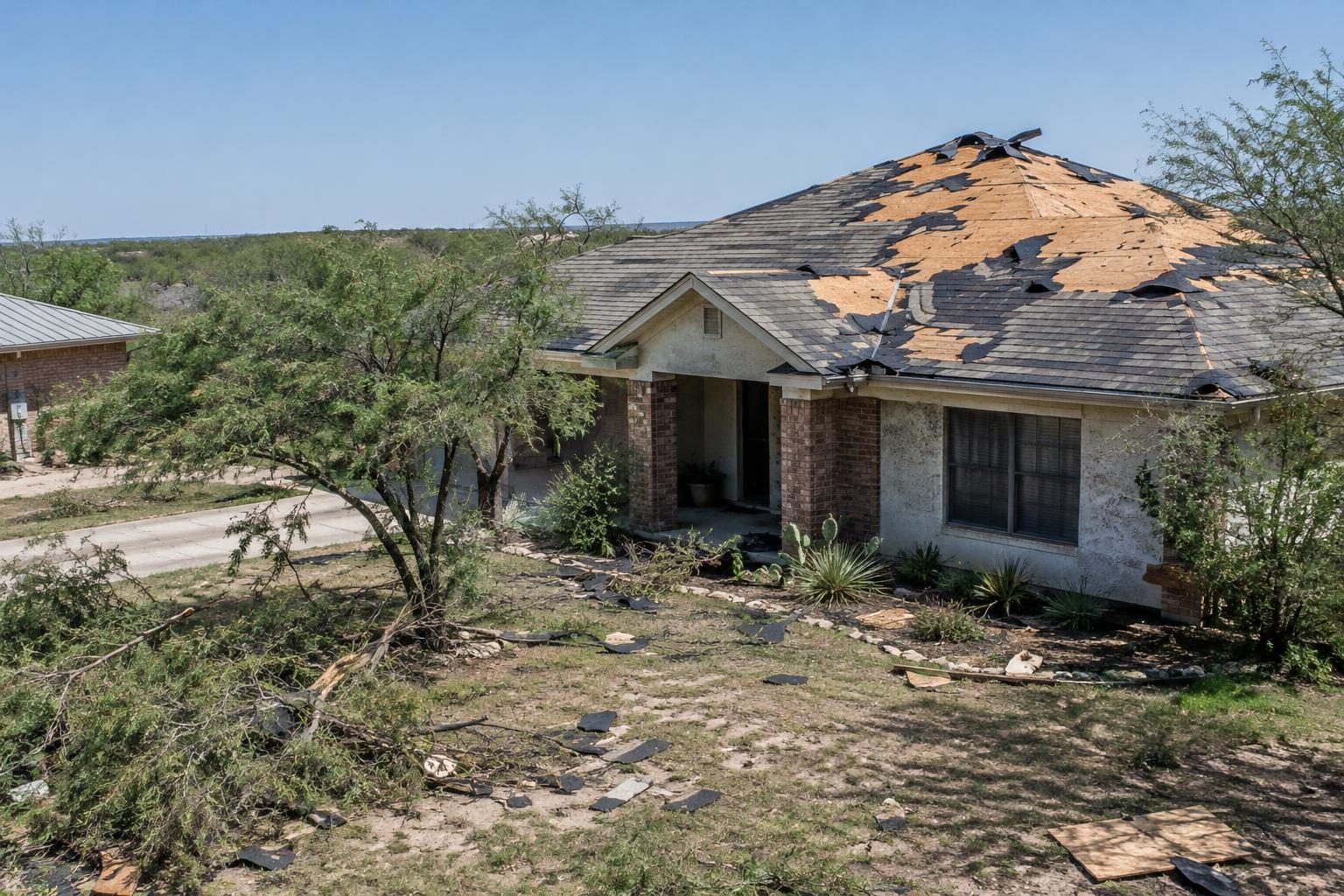
Yes, but a modest one. FEMA’s National Risk Index rates tornado risk in Dimmit County as Relatively Low, higher than 28.2% of U.S. counties, so it is worth planning for without being the main threat. Knowing how your policy treats wind damage now is cheaper than learning it after a storm.
What should Dimmit County homeowners ask their insurance agent this week about fire and tornado coverage?
Ask your agent how your policy treats smoke and soot damage in rooms the flames never reached, because wildfire is the top-ranked hazard in Dimmit County. Those are the rooms insurers most often undervalue.
What Homeowners Insurance Covers in Dimmit County: Fire, Wind and Hail
- Fire and Wildfire: Fire is a covered peril under a standard homeowners policy. The real fight is usually over how much is owed, not whether it is covered at all.
- Wind, Hail and Tornado: Tornado and wind damage are generally covered by a standard homeowners policy, but most policies carry a separate wind or hail deductible, distinct from the main policy deductible.
ClaimsMate’s licensed public adjusters represent the policyholder, never the insurance company, on property insurance claims.
What do those answers mean for homes in Carrizo Springs, Asherton and Big Wells?
Dimmit County has 2,808 occupied homes (U.S. Census), and most are not in a position to absorb a surprise gap between what they assumed and what the policy pays. A Very Low county rating does not mean zero fire exposure, since 2 flood and fire declarations (FEMA) sit in the county’s history.
Outside flood coverage, which only 21 NFIP policies in force (FEMA) cover across the county, your fire and wind answers decide most of your protection.
How far can wildfire smoke and soot spread beyond the burned area of a Dimmit County home?
Smoke and soot can travel through a whole house, so the damage you can see is often a fraction of the damage that exists. A fire in a garage, kitchen or outbuilding can push residue through vents, attics and wall cavities into bedrooms that look untouched.
Why it matters in Dimmit County: A home in Carrizo Springs with an undamaged-looking living room can still carry a smoke claim for that room, but only if someone documents it.
How can a public adjuster help with smoke and soot damage on a Dimmit County claim?
A public adjuster can help make sure the claim covers the rooms smoke reached, not only the area that burned. If a claim ever happens, they document structural damage and personal property losses, including items the insurance company may treat as cleanable or already worthless.
Finding help: Texas homeowners can compare licensed Texas public adjusters and learn more at What is a public adjuster?
Frequently Asked Questions
How many flood and fire disaster declarations has Dimmit County had?
FEMA lists 2 flood and fire disaster declarations for Dimmit County, the most recent dated 2026-09-01. That history is a reminder that fire exposure exists here even though the county’s overall National Risk Index rating is Very Low.
How many homes are in Dimmit County, and how many have flood policies?
The U.S. Census counts 2,808 occupied homes in Dimmit County, and FEMA’s NFIP shows 21 flood policies in force. Flood is not a top hazard here, so most homeowners rely on their fire and wind coverage instead.
What should I photograph now to prepare for a possible smoke claim in Dimmit County?
Photograph every room, closet, ceiling, and HVAC vent, plus valuables like furniture and clothing, while the house is clean. Store the images off-site. A clean before-record makes soot and odor damage far easier to prove later.
Why do smoke damage claims in Dimmit County so often come in short?
The most important point is that a house that did not burn can still be heavily damaged, and the claim only pays for what is documented and argued. In Dimmit County, where wildfire outranks every other hazard even at a Very Low rating, that gap between visible and hidden damage is where homeowners lose money.
Sign up for a free consultation today from ClaimsMate to discover the best path forward for your wildfire damage insurance claim.
Public Adjusters Serving Dimmit County
Sources

Stephanie is a property insurance claim expert with over 20 years of experience working as an insurance adjuster, expert witness, appraiser and umpire. She is passionate about sharing her expertise, knowledge, tips and training to help both property owners and Public Adjusters in their pursuit of effectively managing claims and recovering the claim settlement they deserve after a loss.