Does Deaf Smith County, TX Homeowners Insurance Cover Hail and Wind Damage as Expected?
The FEMA National Risk Index (fema.gov) rates hail in Deaf Smith County as Relatively High, higher than 97.4% of U.S. counties, with strong wind also Relatively High. That matters for the 6,022 occupied homes in the county (U.S. Census), from Hereford outward, because hail and wind claims are where insurers and homeowners most often disagree about what the damage actually is. This page covers what the numbers mean and what to settle on your side before a storm.
Deaf Smith County Risk Profile
Overall risk: Relatively Low, higher than 61.8% of U.S. counties
| Hazard | Rating | Score (percentile) |
|---|---|---|
| Wildfire | Relatively Low | 85.8 |
| Riverine Flooding | Very Low | 13.1 |
| Tornado | Relatively Moderate | 69.7 |
| Hail | Relatively High | 97.4 |
| Strong Wind | Relatively High | 85 |
| Lightning | Relatively Low | 33.4 |
Source: FEMA National Risk Index. Scores are percentile ranks among all U.S. counties: a score of 90 means higher risk than 90% of counties. Ratings are for the county as a whole.
Deaf Smith County at a Glance
- County seat
- Hereford
- Largest towns
- Hereford
- Occupied homes
- 6,022
- Flood insurance (NFIP) policies in force
- 5
Sources: U.S. Census Bureau (American Community Survey), FEMA NFIP policy data.
Is wildfire a real threat to my home in Deaf Smith County, TX?
It is a smaller threat than hail or wind, but not zero. FEMA’s National Risk Index rates wildfire in Deaf Smith County as Relatively Low, higher than 85.8% of U.S. counties, so grass and brush fire near Hereford and the rural edges is still worth planning for.
What Deaf Smith County’s hail and wind ratings mean for homeowners
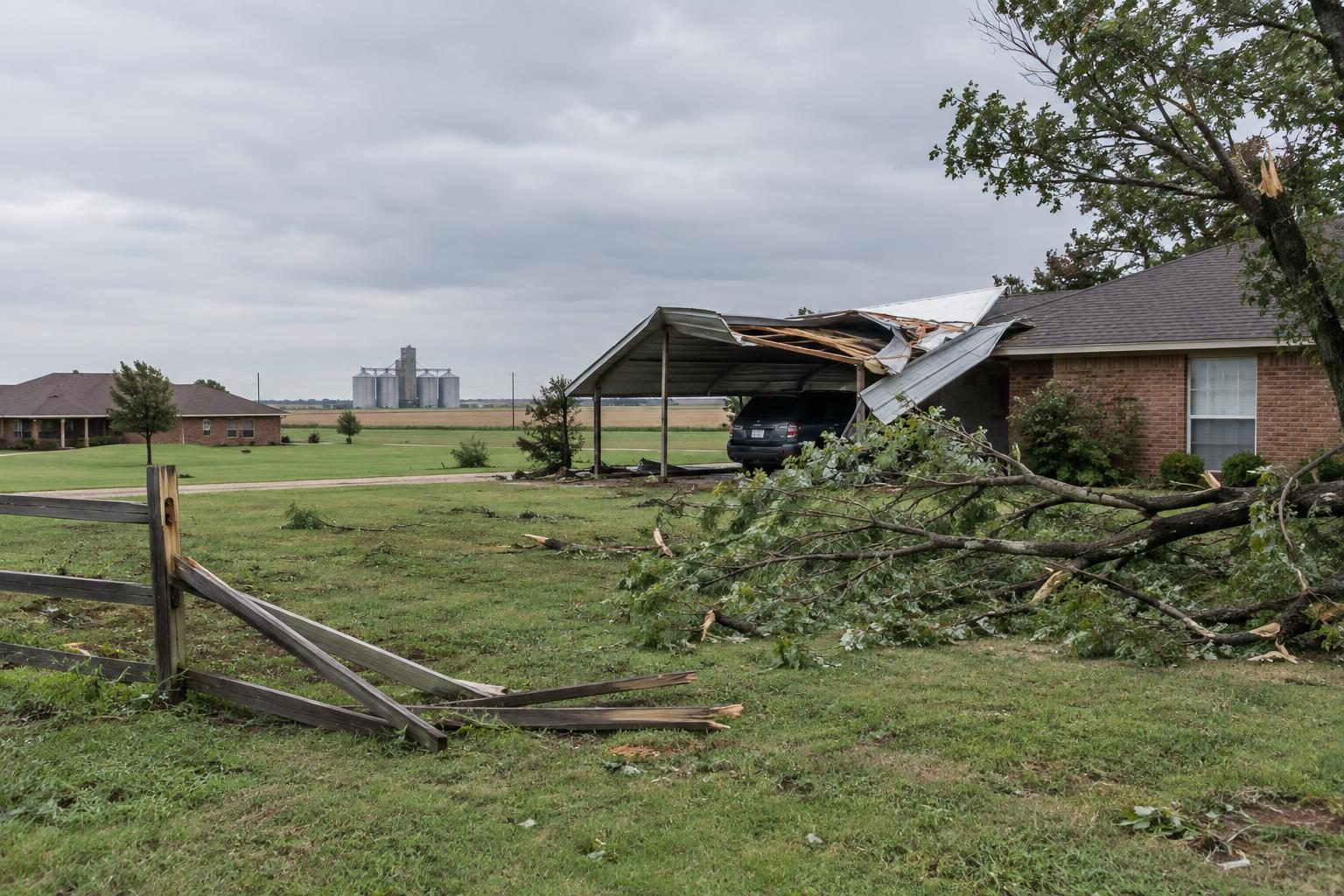
Hail is the hazard to take most seriously here. A county-level rating of Relatively High means Deaf Smith County sits above nearly all U.S. counties for hail exposure, so roof and exterior damage is a realistic expectation over the life of a home, not a rare event.
Strong wind is close behind. The Risk Index also rates strong wind Relatively High, higher than 85% of U.S. counties, and tornado Relatively Moderate. Hail and wind often arrive in the same storm, which is exactly when claim paperwork gets messy.
What Homeowners Insurance Covers in Deaf Smith County: Wind and Hail, Fire
- Wind, Hail and Tornado: Tornado and wind damage are generally covered by a standard homeowners policy, but most policies carry a separate wind or hail deductible, distinct from the main policy deductible.
- Fire and Wildfire: Fire is a covered peril under a standard homeowners policy. The real fight is usually over how much is owed, not whether it is covered at all.
ClaimsMate’s licensed public adjusters represent the policyholder, never the insurance company, on property insurance claims.
How insurers in Deaf Smith County dispute how hail and wind damage is classified
The fight is usually over the label, not the damage. After a Deaf Smith County storm, an insurer can call hail dents on a roof cosmetic, call granule loss wear and tear, or sort a wind-driven tear into a different category than hail. Each label can change what the policy pays and which deductible applies.
The same storm can be split into pieces. A single Hereford-area hailstorm may leave roof impacts, torn shingles, damaged gutters and broken window screens. If the insurer treats some of that as old damage or maintenance, your payment shrinks even though one event caused it all.
- Cosmetic damage versus functional damage to roofing
- Hail damage versus pre-existing wear
- Wind damage versus damage from flying debris
What Deaf Smith County homeowners can check before hail season
Build a before-the-storm record of the roof. Hail ranks highest in this county, so dated photos of every roof slope, vents, flashing and gutters give you proof of condition if an insurer later argues the damage was already there. Include the garage and any outbuildings.
Photograph the exterior beyond the roof. Wind and hail in Deaf Smith County also hit siding, window screens, fences, HVAC condensers and metal awnings. Photos of each now make it harder to relabel new damage as old.
How a public adjuster helps when an insurer reclassifies Deaf Smith County storm damage
A classification dispute is a paperwork and evidence problem. When your insurer calls hail damage cosmetic or wind damage wear, a public adjuster can write up the scope of damage, tie it to the storm, and challenge the label with documentation rather than a phone argument.
If you want to see who handles this work, here are Texas public adjusters who work on property claims. You can also read how to deal with the insurance company adjuster before that first inspection in Hereford or the rest of the county.
Frequently Asked Questions
How high does FEMA rate hail risk in Deaf Smith County?
FEMA’s National Risk Index rates hail in Deaf Smith County as Relatively High, higher than 97.4% of U.S. counties. That makes it the county’s top-ranked hazard in the data. The rating is county-wide and does not describe any single home.
Is tornado a concern in Deaf Smith County, TX?
Tornado is rated Relatively Moderate for Deaf Smith County, higher than 69.7% of U.S. counties. It is less likely than hail or wind but can still cause severe damage. A tornado can leave mixed damage that insurers sometimes classify in different ways.
How many flood insurance policies are in force in Deaf Smith County?
FEMA’s NFIP shows 5 flood insurance policies in force in Deaf Smith County. Against 6,022 occupied homes (U.S. Census), that is a very small group, which fits the county’s Very Low riverine flooding rating.
Why hail claims in Deaf Smith County so often come down to classification
Hail is the county’s highest-rated hazard, and the label on the damage decides the payment. With hail and strong wind both Relatively High in Deaf Smith County, most disagreements start when the insurer and the homeowner describe the same roof differently.
Sign up for a free consultation today from ClaimsMate to discover the best path forward for your hail damage insurance claim.
Public Adjusters Serving Deaf Smith County
Sources

Stephanie is a property insurance claim expert with over 20 years of experience working as an insurance adjuster, expert witness, appraiser and umpire. She is passionate about sharing her expertise, knowledge, tips and training to help both property owners and Public Adjusters in their pursuit of effectively managing claims and recovering the claim settlement they deserve after a loss.