Is Your Collingsworth County, TX Home Insurance Ready for Wildfire and Strong Wind?
The FEMA National Risk Index (https://www.fema.gov/flood-maps/products-tools/national-risk-index) ranks wildfire as Collingsworth County's highest natural hazard, at Relatively Low and higher than 75.1% of U.S. counties. That is lower than many Texas counties, but with 1,018 occupied homes (U.S. Census) around Wellington and Dodson, one grass fire near town is enough to matter. This page covers what wildfire and strong wind do to homes here and what to do before either one shows up.
Collingsworth County Risk Profile
Overall risk: Very Low, higher than 27.4% of U.S. counties
| Hazard | Rating | Score (percentile) |
|---|---|---|
| Wildfire | Relatively Low | 75.1 |
| Riverine Flooding | Very Low | 3.3 |
| Tornado | Relatively Low | 34 |
| Hail | Relatively Low | 62 |
| Strong Wind | Relatively Moderate | 53.9 |
| Lightning | Very Low | 8.2 |
Source: FEMA National Risk Index. Scores are percentile ranks among all U.S. counties: a score of 90 means higher risk than 90% of counties. Ratings are for the county as a whole.
Collingsworth County at a Glance
- County seat
- Wellington
- Largest towns
- Wellington, Dodson
- Occupied homes
- 1,018
- Flood insurance (NFIP) policies in force
- 20
Sources: U.S. Census Bureau (American Community Survey), FEMA NFIP policy data.
Can a wildfire really affect my home in Collingsworth County, TX?
Yes. FEMA rates wildfire risk in Collingsworth County as Relatively Low, higher than 75.1% of U.S. counties, so it is not a zero-risk place. Know where your home sits relative to open grass and brush, and photograph the property now while nothing is damaged.
How does wildfire put Collingsworth County homes at risk?
Wildfire is Collingsworth County’s top-ranked hazard, and FEMA’s county-level rating of Relatively Low (higher than 75.1% of U.S. counties) means fires happen here, just less often than in the highest-risk counties. In a rural county like this one, the threat is usually fast-moving grass fire reaching the edge of a property, not a wall of flame through town.
What to check now: look at what grows or is stored within 30 feet of your house outside Wellington or Dodson. Dry grass, stacked firewood, hay bales and brush piles against a fence or wall are what carry fire to a structure.
- Mow and clear dry growth near the house and outbuildings.
- Keep a gravel or bare-dirt strip along walls where you can.
- Store firewood and propane away from the house.
What Homeowners Insurance Covers in Collingsworth County: Fire, Wind and Hail
- Fire and Wildfire: Fire is a covered peril under a standard homeowners policy. The real fight is usually over how much is owed, not whether it is covered at all.
- Wind, Hail and Tornado: Tornado and wind damage are generally covered by a standard homeowners policy, but most policies carry a separate wind or hail deductible, distinct from the main policy deductible.
ClaimsMate’s licensed public adjusters represent the policyholder, never the insurance company, on property insurance claims.
How does strong wind hit Collingsworth County homes differently?
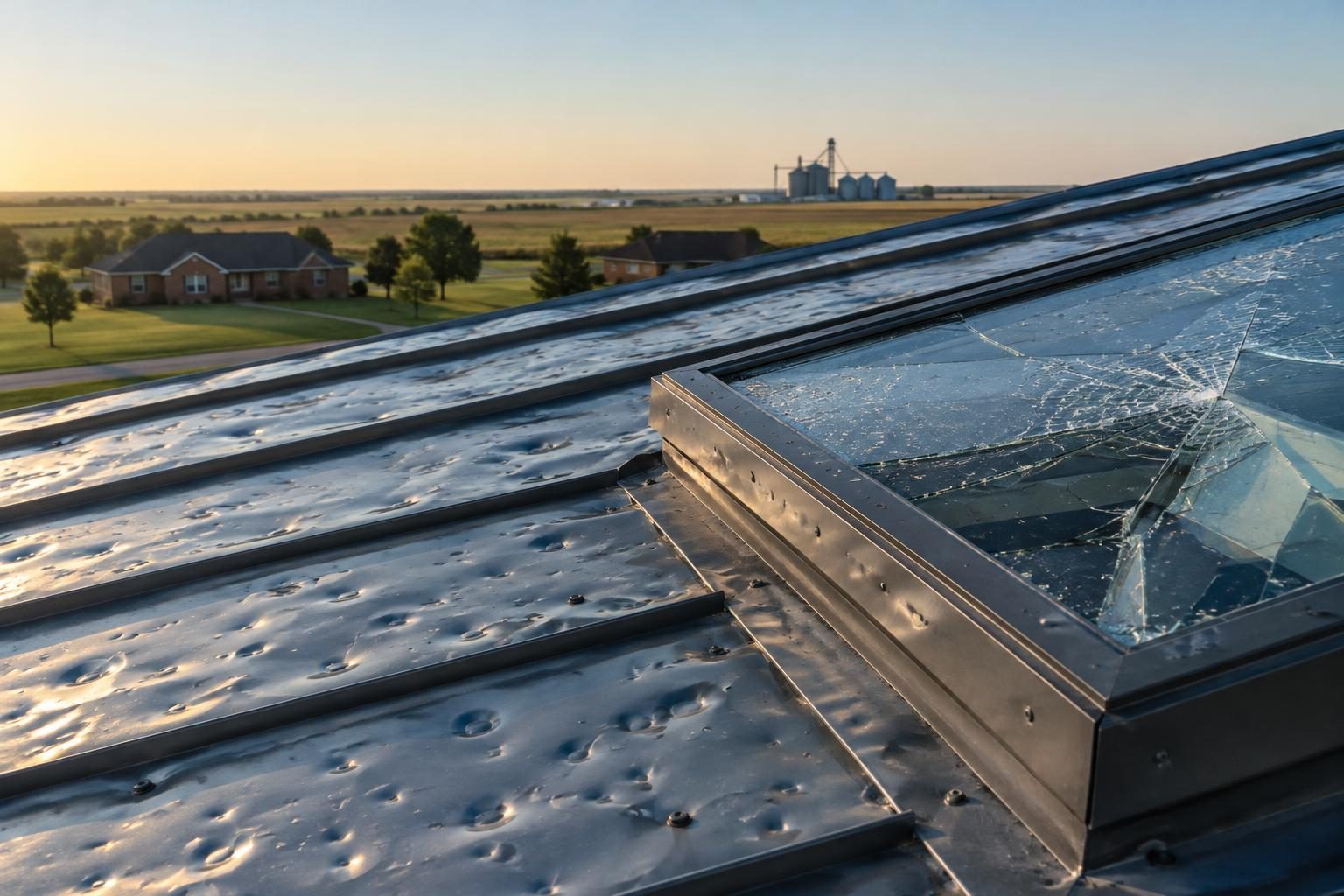
Strong wind is the county’s second-ranked hazard, rated Relatively Moderate and higher than 53.9% of U.S. counties by the FEMA National Risk Index. Unlike a grass fire, wind damages the same roofs, siding, fences and carports year after year, often a few shingles at a time rather than all at once.
Hail adds to it. Hail is rated Relatively Low here, higher than 62% of U.S. counties, so a roof can take wind and hail damage in the same season. Dated photos of your roof before any storm give you a baseline to compare against.
Why does smoke and soot damage reach beyond the burned area in Collingsworth County?
Smoke and soot travel through a home far past the visible burn, so a fire that never touched your house can still leave residue in vents, insulation, closets and fabrics. With wildfire as Collingsworth County’s highest-rated hazard, a grass fire upwind of Wellington can send smoke across a whole property.
How can a public adjuster help with smoke and soot damage in Collingsworth County?
A licensed public adjuster can document the smoke and soot damage the insurance company’s estimate leaves out, including contaminated contents, ductwork and rooms with no visible burn. That matters most on a rural property where a fire may have stayed outside but the smoke did not.
Starting early helps. If a claim ever happens, Texas public adjusters can build the room-by-room record while the evidence is fresh. It also helps to understand how to deal with the insurance company’s adjuster before that visit.
Frequently Asked Questions
How much does Collingsworth County’s wildfire rating mean for my home?
The FEMA National Risk Index rates Collingsworth County wildfire risk as Relatively Low, higher than 75.1% of U.S. counties. It is a county-level figure, not a prediction for your lot. Your own exposure depends on the grass, brush and structures right around your home.
How many homes are there in Collingsworth County?
The U.S. Census counts 1,018 occupied housing units in Collingsworth County. With the two largest towns being Wellington and Dodson, many of those homes sit on rural land, where grass and brush often reach close to the structure.
Is flood a big concern in Collingsworth County?
Not compared with other hazards. FEMA rates riverine flooding here as Very Low, and the NFIP shows 20 flood policies in force in the county. Wildfire and strong wind deserve more of your attention.
Smoke Damage After a Collingsworth County Fire Is Often Underestimated
Wildfire risk in Collingsworth County is rated Relatively Low, but the damage from one fire is rarely limited to what burned. Clearing dry growth near your home and keeping a dated record of every room are the two steps that pay off most here.
Sign up for a free consultation today from ClaimsMate to discover the best path forward for your wildfire damage insurance claim.
Public Adjusters Serving Collingsworth County
Sources

Stephanie is a property insurance claim expert with over 20 years of experience working as an insurance adjuster, expert witness, appraiser and umpire. She is passionate about sharing her expertise, knowledge, tips and training to help both property owners and Public Adjusters in their pursuit of effectively managing claims and recovering the claim settlement they deserve after a loss.