Who Helps Business Owners After Fire or Storm Damage?
Several types of professionals help commercial property owners recover after fire, storm, or other property damage. These include mitigation and restoration contractors, general contractors, insurance company adjusters, and licensed commercial public adjusters in Texas. While contractors focus on cleanup and repairs and the insurance company’s adjuster evaluates the loss for the insurer, a ClaimsMate commercial public adjuster represents you, the policyholder. ClaimsMate helps Texas business owners document property damage, review insurance coverage, manage claims, and negotiate with insurance companies for a fair settlement.
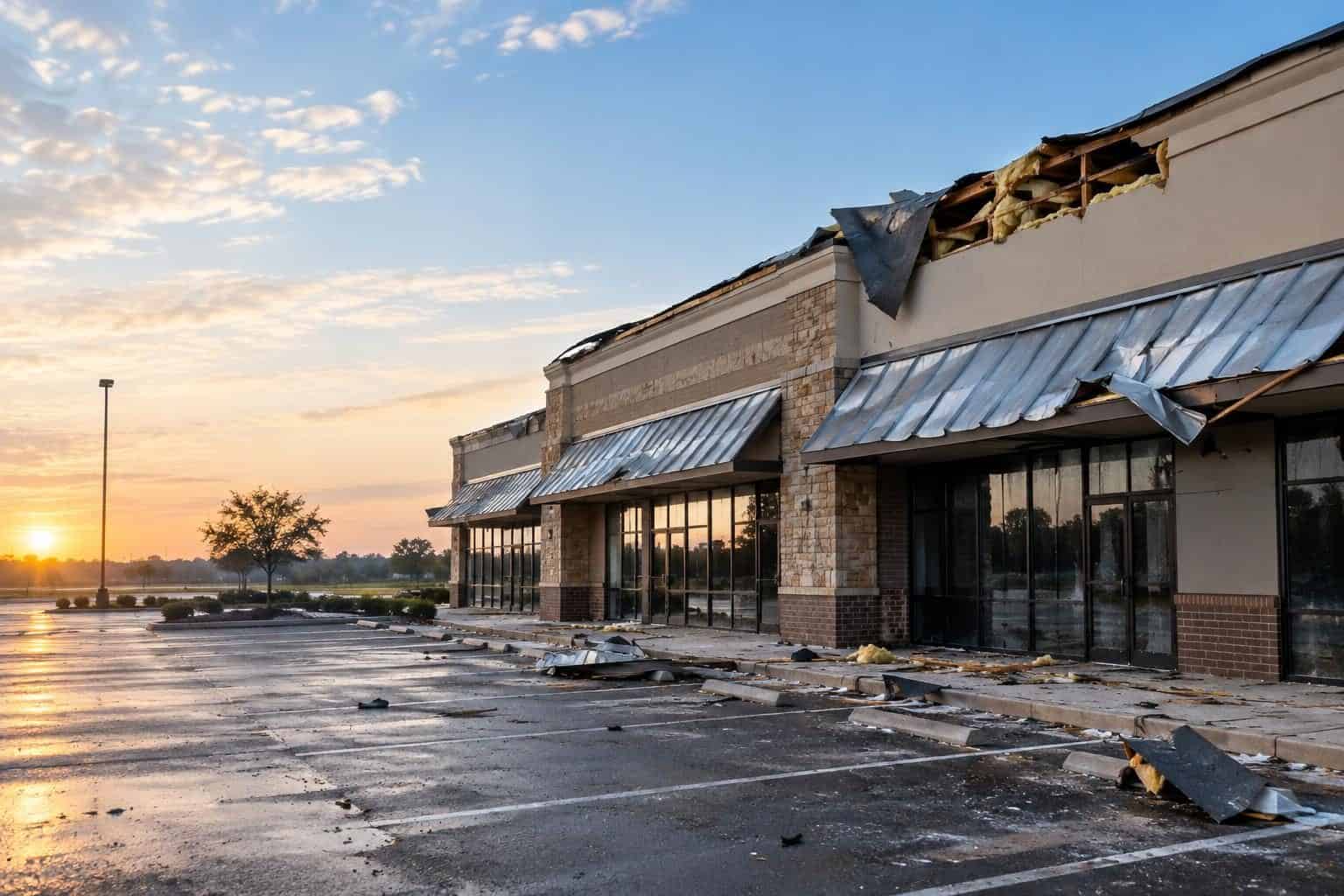
- Restoration contractors dry, clean and rebuild, but they do not represent you in the insurance claim.
- Your insurer’s adjuster works for the insurance company, while a licensed public adjuster acts on behalf of the insured.
- Texas requires anyone acting as a public adjuster to hold a license, and you can check it on the Texas Department of Insurance website.
- Texas law sets claim deadlines for insurers, so knowing them helps you spot a stalled claim.
Which Companies Help Business Owners After Fire or Storm Damage?
After a fire, storm, or other major property loss, business owners often need several professionals to help restore their commercial property and navigate the insurance claims process. However, each company has a different responsibility, and understanding who does what can make a significant difference in protecting your business and your insurance claim.
At ClaimsMate, we help business owners understand the role of a public adjuster and why having someone represent their interests during the insurance claims process matters. Commercial property insurance policies can be complicated, and assuming that contractors or the insurance company’s adjuster will handle everything can lead to confusion, disputes, and potentially overlooked damage.
Here are four types of companies and professionals commonly involved after commercial fire or storm damage:
- Mitigation and Restoration Contractors: These professionals help prevent additional property damage by boarding up broken windows and openings, removing standing water, drying affected areas, and cleaning smoke, soot, and debris. Their primary responsibility is to stabilize the property and begin the restoration process.
- General Contractors: General contractors handle property repairs, reconstruction, and rebuilding. They assess the work required, develop repair estimates, and coordinate construction. However, they do not determine what your commercial property insurance policy covers or how much the insurance company should pay.
- The Insurance Company’s Adjuster: Also known as a company or staff adjuster, this professional inspects the property, evaluates the reported damage, and prepares an estimate on behalf of the insurance company. Their responsibility is to investigate and evaluate the claim for the insurer.
- A Public Adjuster: A licensed public adjuster represents the policyholder, not the insurance company. A ClaimsMate public adjuster can help business owners document property damage, review insurance policy coverage, prepare claim estimates, negotiate with the insurance company, and dispute low or inadequate settlement offers.
Why Business Owners Should Understand the Difference
Of these four professionals, only the public adjuster works exclusively on behalf of the policyholder during the insurance claims process. Restoration contractors focus on preventing further damage, general contractors handle repairs, and insurance company adjusters evaluate claims for the insurer.
ClaimsMate helps level the playing field by representing property owners throughout the insurance claim process. If your business has experienced fire, storm, water, or other property damage, having a licensed public adjuster on your side can help you better understand your coverage, document your losses, and pursue a fair insurance settlement.
What does a commercial public adjuster do that a contractor does not?
A commercial public adjuster handles the insurance claim itself, while a contractor handles the physical work.
Think of it this way. A restoration company can tell you what it takes to repair a damaged roof (say, after a hailstorm on a strip center). A public adjuster documents the loss, reads the policy, builds the claim, and deals with the insurer for you.
For a commercial property, that often includes the parts owners forget about. Business income lost while you can’t operate, extra expense to keep running in a temporary space, and damaged equipment or inventory can all be part of a claim, depending on your policy. Read more on Commercial Fire Damage Claims and 10 tips for a successful claim
A public adjuster acts on behalf of the insured, according to the Texas Department of Insurance in Commissioner’s Bulletin B-0046-08. The insurer’s adjuster does not. That difference matters when you and the insurer see the damage differently.
If you want to see how our firm fits in, take a look at our page on Texas public adjusters.
How do I know a public adjuster is licensed in Texas?
You can check their license, and you can do it yourself in a few minutes.
Under Texas Insurance Code Section 4102.051, anyone acting as a public insurance adjuster in Texas must hold a license issued by the Commissioner of Insurance. The Texas Department of Insurance website lets you look up a license status, as noted in Commissioner’s Bulletin B-0046-08.
Here is a short checklist to use before you sign anything:
- License number: Ask for it and look it up on the TDI website.
- Who does the work: Confirm you are hiring the adjuster themselves, not a lead-gathering service that passes your claim along.
- Written agreement: Read what the adjuster will do, and ask questions about anything unclear.
- Experience with commercial losses: Ask whether they handle business income and building claims, not only homes.
ClaimsMate is a licensed Texas public adjuster firm (Texas Public Adjuster License #2326706). We are the adjuster ourselves, not a referral service, and we represent the policyholder, never the insurance company.
What Texas deadlines apply to my commercial property claim?
Texas sets clear timelines for insurers, and knowing them helps you tell a normal wait from a stalled claim.
These come from the Texas Insurance Code, and they generally apply once you give notice of a claim:
- Acknowledge and begin investigating: The insurer has 15 days to acknowledge the claim, start its investigation, and request the items it needs (30 business days for an eligible surplus lines insurer), under Section 542.055.
- Accept or reject in writing: The insurer has 15 business days after receiving all requested items. If it needs more time, it must explain why and then decide within 45 days, under Section 542.056.
- Pay: Once the insurer says it will pay, payment is due within 5 business days (20 business days for an eligible surplus lines insurer), under Section 542.057.
- Late payment: An insurer that delays payment for more than 60 days after receiving all requested items owes damages and other items under Section 542.060, according to Section 542.058.
One more date to know. A policyholder must give the insurer written notice at least 61 days before filing suit over a property claim, under Section 542A.003.
This is general information, not legal advice. Your policy and your facts decide how these rules apply to you.
Does the type of storm change who can help or what is covered?
Yes, because the cause of the damage decides which policy responds, and that affects who you call first.
Texas gets plenty of weather trouble. The National Insurance Crime Bureau reported 811,381 hail claims in Texas from 2016 through 2018, the most of any state, per its August 2019 release. The Texas Department of Insurance counted 764,898 claims from Hurricane Harvey, with about $19.2 billion in incurred losses, in its Hurricane Harvey data call. The February 2021 winter storm brought 511,473 claims and about $10.6 billion in incurred losses, according to the TDI winter storm data call.
So where does the truth lie on coverage? Often, it depends on which peril caused the loss. Here are a few Texas examples:
- Coastal wind and hail: The Texas Windstorm Insurance Association covers wind and hail only, in all 14 first-tier coastal counties and parts of Harris County east of Highway 146, according to TWIA.
- Flood: Most property policies do not cover flood damage, per the Texas Department of Insurance. Most new flood policies also have a 30-day waiting period, and the National Flood Insurance Program covers a home up to $250,000 and belongings up to $100,000.
- Fire and freeze: These usually fall under your commercial property policy, though exclusions and conditions vary.
If your insurer offers far less than repairs will take, our article on how to tell whether you are being underpaid can help you sort out next steps.
Frequently Asked Questions
Can a restoration company file my insurance claim for me?
A restoration company can document the damage and give you repair estimates, but it does not act as your claim representative. In Texas, someone who negotiates a claim for a policyholder generally needs a public adjuster license. Ask any company that offers to “handle your claim” for its license number.
Is a public adjuster the same as the insurance company’s adjuster?
No. The insurer’s adjuster works for the insurance company, while a public adjuster acts on behalf of the insured, according to the Texas Department of Insurance. They may look at the same damage and reach different conclusions about its scope.
When should a commercial property owner call a public adjuster?
Many owners call soon after the loss, once the property is safe, so the damage and business interruption are documented from the start. Others call after an offer arrives that seems too low or a claim that has stalled. A free consultation can help you decide whether it makes sense for your situation.
Does ClaimsMate offer a free consultation for commercial property owners?
Yes. ClaimsMate is a licensed Texas public adjuster firm (Texas Public Adjuster License #2326706) and offers a free consultation. You can call (877) 202-0204 to talk through your fire or storm loss.
Schedule A Free Consultation
To talk through your commercial property claim with a licensed Texas public adjuster who works for you, not your insurance company, schedule a no-cost consultation with ClaimsMate.
Sources
- Texas Insurance Code Section 4102.051
- Texas Department of Insurance, Commissioner’s Bulletin B-0046-08
- Texas Insurance Code Section 542.055
- Texas Insurance Code Section 542.056
- Texas Insurance Code Section 542.057
- Texas Insurance Code Section 542.058
- Texas Insurance Code Section 542A.003
- Texas Windstorm Insurance Association
- Texas Department of Insurance
- National Insurance Crime Bureau, August 2019
- Texas Department of Insurance winter storm data call
- Texas Department of Insurance Hurricane Harvey data call

Stephanie is a property insurance claim expert with over 20 years of experience working as an insurance adjuster, expert witness, appraiser and umpire. She is passionate about sharing her expertise, knowledge, tips and training to help both property owners and Public Adjusters in their pursuit of effectively managing claims and recovering the claim settlement they deserve after a loss.