My homeowners insurance company denied my property damage claim. What should I do next?
If your insurance claim was denied, what to do first is read the denial letter closely and find the exact reason given. Then gather your documents, ask for the insurer’s decision in writing if you lack it, and compare it to your policy. You can dispute it, add evidence, or get help from a licensed Texas public adjuster.
- A denial is the insurer’s decision on the facts and policy language it reviewed, and it is not always the final word on your claim.
- The denial letter should state the reason, and that reason tells you whether the problem is evidence, a policy exclusion, or a missed deadline.
- Texas law sets clear timelines for how insurers must acknowledge, investigate, decide and pay claims, so you can check whether yours followed them.
- A licensed Texas public adjuster works for you, not the insurance company, and can review a denial with you at no cost during a free consultation.
What should I do first after my claim is denied?
Start by reading the denial letter slowly and finding the specific reason the insurer gave. That one sentence decides everything that comes next.
Most of us aren’t insurance claim experts, and that’s okay. A denial letter can feel like a closed door, but it is really a written explanation you can test.
Here is a simple order of steps to follow:
- Save everything: Keep the denial letter, the envelope or email, your policy, and every message with the adjuster.
- Find the stated reason: Look for the policy language the insurer relied on, such as an exclusion, a limit, or a missing item.
- Document the damage again: Take fresh, dated photos and video of the damage, and keep any repair estimates or invoices.
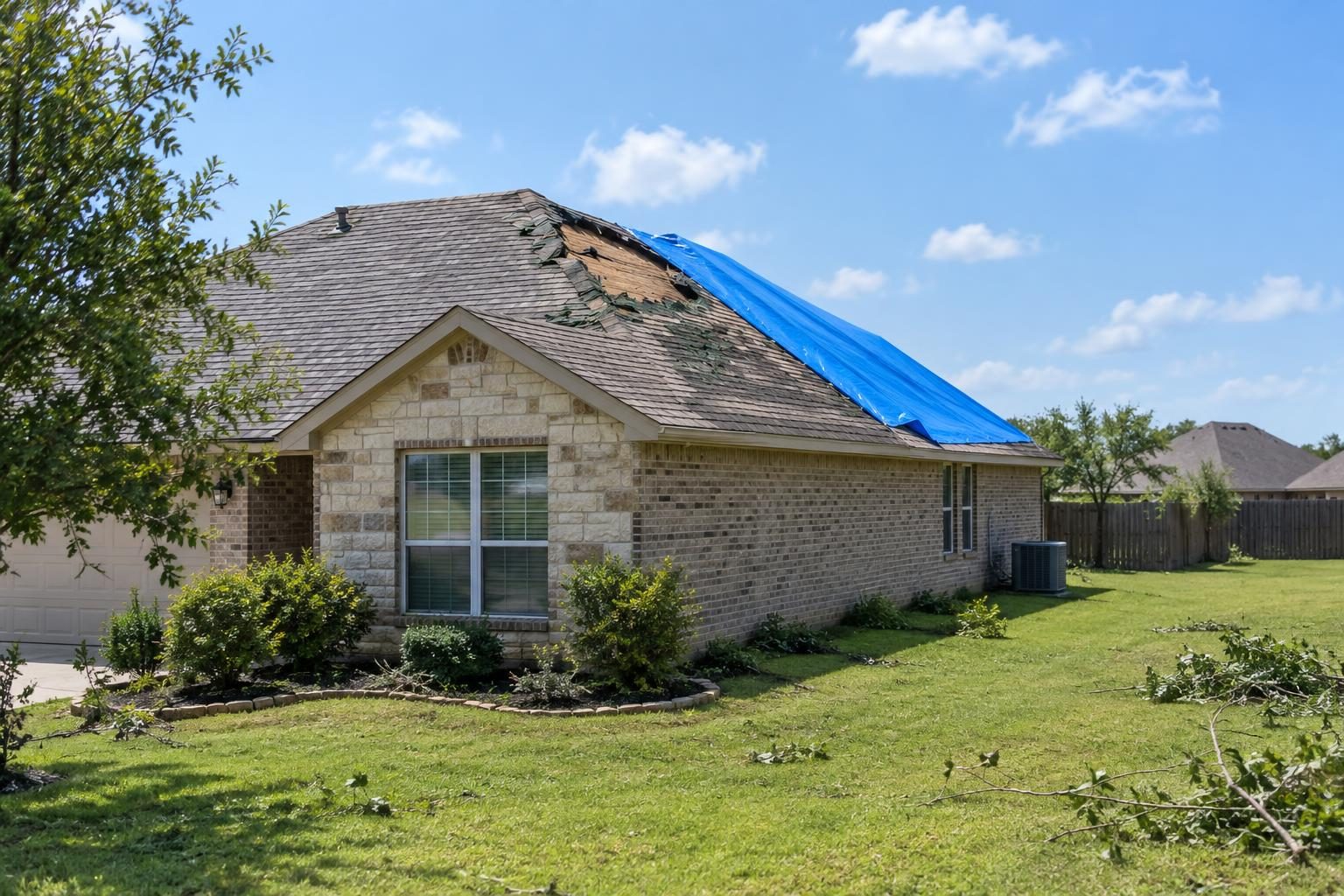
- Protect the property: Make reasonable temporary repairs (like a tarp over a damaged roof) and keep the receipts.
- Write down what you were told: Note names, dates, and what each person said on every call.
Don’t throw away damaged materials until you have talked through your options. They can be evidence.
Why do insurance companies deny property damage claims?
Insurers deny claims when they conclude the loss is not covered, is not proven, or was not reported the way the policy requires. That doesn’t always mean your claim is weak, only that the insurer saw a gap.
Insurers and their adjusters work from the policy wording and the evidence in front of them. So a denial often comes down to how the facts line up with that wording.
Common reasons include:
- Exclusions: The policy may not cover certain causes. Most homeowners policies do not cover flood damage, according to the Texas Department of Insurance.
- Wear and tear: An insurer may say a roof failed from age rather than from a storm.
- Cosmetic damage exclusions: If hail dents a metal roof without causing leaks, your insurer may call it cosmetic.
- Late or incomplete reporting: The insurer may say it didn’t get notice in time or didn’t get the items it requested.
- Disagreement about cause: You see storm damage, the insurer’s inspector sees a different cause.
Texas homeowners deal with these questions often. The National Insurance Crime Bureau counted 811,381 hail claims in Texas from 2016 through 2018, the most of any state, so insurers review a great many storm claims.
Did my insurer follow the Texas claim deadlines?
You can check, because the Texas Insurance Code sets timelines that insurers are expected to meet. Comparing your dates to them is one of the most useful things you can do after a denial.
Here is what the law says, in plain terms:
- Acknowledging your claim: After notice of a claim, an insurer has 15 days to acknowledge it, begin its investigation and request the items it needs (30 business days for an eligible surplus lines insurer), under Texas Insurance Code Section 542.055.
- Making a decision: An insurer must accept or reject a claim in writing within 15 business days of receiving all items it requested. If it needs more time, it must say why, then decide within 45 days, under Section 542.056.
- Paying an accepted claim: Once an insurer says it will pay, payment is due within 5 business days (20 business days for an eligible surplus lines insurer), under Section 542.057.
- Delays in payment: An insurer that delays payment for more than 60 days after receiving all requested items owes damages and other items under Section 542.060, according to Section 542.058.
Write down your own timeline: the date you reported the loss, the date of each request, and the date of the denial. If something looks off, that is worth raising. This is general information, not legal advice.
What are my options if I disagree with the denial?
You can ask the insurer to reconsider with new evidence, get an independent opinion on the damage, or bring in a licensed public adjuster to dispute the decision.
Let’s look at each path.
Send more evidence. If the denial says the damage wasn’t proven, add photos, a contractor’s written estimate, weather records, or an engineer’s report. Then ask the insurer in writing to review its decision.
Ask for the reasoning in writing. If the letter is vague, request the specific policy provisions and the findings behind the decision.
Work with a public adjuster. A Texas public adjuster represents the policyholder and acts on behalf of the insured, according to the Texas Department of Insurance, Commissioner’s Bulletin B-0046-08. That is different from the adjuster the insurance company sends, who works for the insurer. Our guide to Texas public adjusters explains how this role works.
Consider legal steps. A policyholder must give the insurer written notice at least 61 days before filing suit over a property claim, under Texas Insurance Code Section 542A.003. If you are heading that way, talk with an attorney about the details.
How do I find a licensed public adjuster in Texas to look at my denial?
Confirm the license first. Anyone acting as a public insurance adjuster in Texas must hold a license issued by the Commissioner of Insurance, under Texas Insurance Code Section 4102.051.
You can check a public adjuster’s license status on the Texas Department of Insurance website. It takes a few minutes and is worth doing before you sign anything.
When comparing options, look for these things:
- An active Texas license: Ask for the license number and verify it yourself.
- Experience with your type of loss: Roof, hail, water, freeze, fire and hurricane claims each have their own issues.
- A clear explanation of the process: You should understand what they will do with your denial and why.
- Representation of you only: A public adjuster should never work for the insurance company.
ClaimsMate is a Texas public adjuster firm, licensed under Texas Public Adjuster License #2326706. We are the adjuster ourselves, not a referral service. If you want to see what to look for in more detail, read where to find a reliable public adjuster for residential property damage. Our free consultation is a good place to bring your denial letter, and you can reach us at (877) 202-0204.
Frequently Asked Questions
Can I still get paid if my homeowners claim was denied?
Sometimes, yes. A denial may be based on missing evidence or a disagreement about the cause of damage, and new documentation or an independent review can change the outcome. Whether it applies to you depends on your policy and the facts of your loss.
Does a denial mean my insurance company acted in bad faith?
Not necessarily. Insurers often deny claims because of policy exclusions, limits, or reporting issues, and that is different from acting in bad faith. If you think the process broke Texas timelines or rules, a licensed adjuster or an attorney can look at the specifics.
Does my homeowners policy cover storm damage from a hurricane or flood?
It depends on the cause of the damage. Most homeowners policies do not cover flood damage, and in the first-tier coastal counties and parts of Harris County east of Highway 146, wind and hail coverage may come through TWIA. Check your policy and any separate flood or windstorm coverage.
What is the difference between a public adjuster and the insurance company’s adjuster?
A public adjuster is licensed by the state and works for the policyholder. The insurance company’s adjuster works for the insurer. In Texas, a public adjuster acts on behalf of the insured, according to the Texas Department of Insurance.
Schedule A Free Consultation
To talk through your denied or underpaid claim with a licensed Texas public adjuster who works for you, not your insurance company, schedule a no-cost consultation with ClaimsMate.
Sources
- Texas Insurance Code Section 4102.051
- Texas Department of Insurance, Commissioner’s Bulletin B-0046-08
- Texas Insurance Code Section 542.055
- Texas Insurance Code Section 542.056
- Texas Insurance Code Section 542.057
- Texas Insurance Code Section 542.058
- Texas Insurance Code Section 542A.003

Stephanie is a property insurance claim expert with over 20 years of experience working as an insurance adjuster, expert witness, appraiser and umpire. She is passionate about sharing her expertise, knowledge, tips and training to help both property owners and Public Adjusters in their pursuit of effectively managing claims and recovering the claim settlement they deserve after a loss.