What companies help homeowners negotiate insurance claims after severe storms?
The companies that negotiate storm claims for homeowners are public adjuster firms. A storm damage public adjuster Texas homeowners hire works for the policyholder, not the insurance company, and must hold a Texas license. You can verify any adjuster’s license with the Texas Department of Insurance before you sign anything.
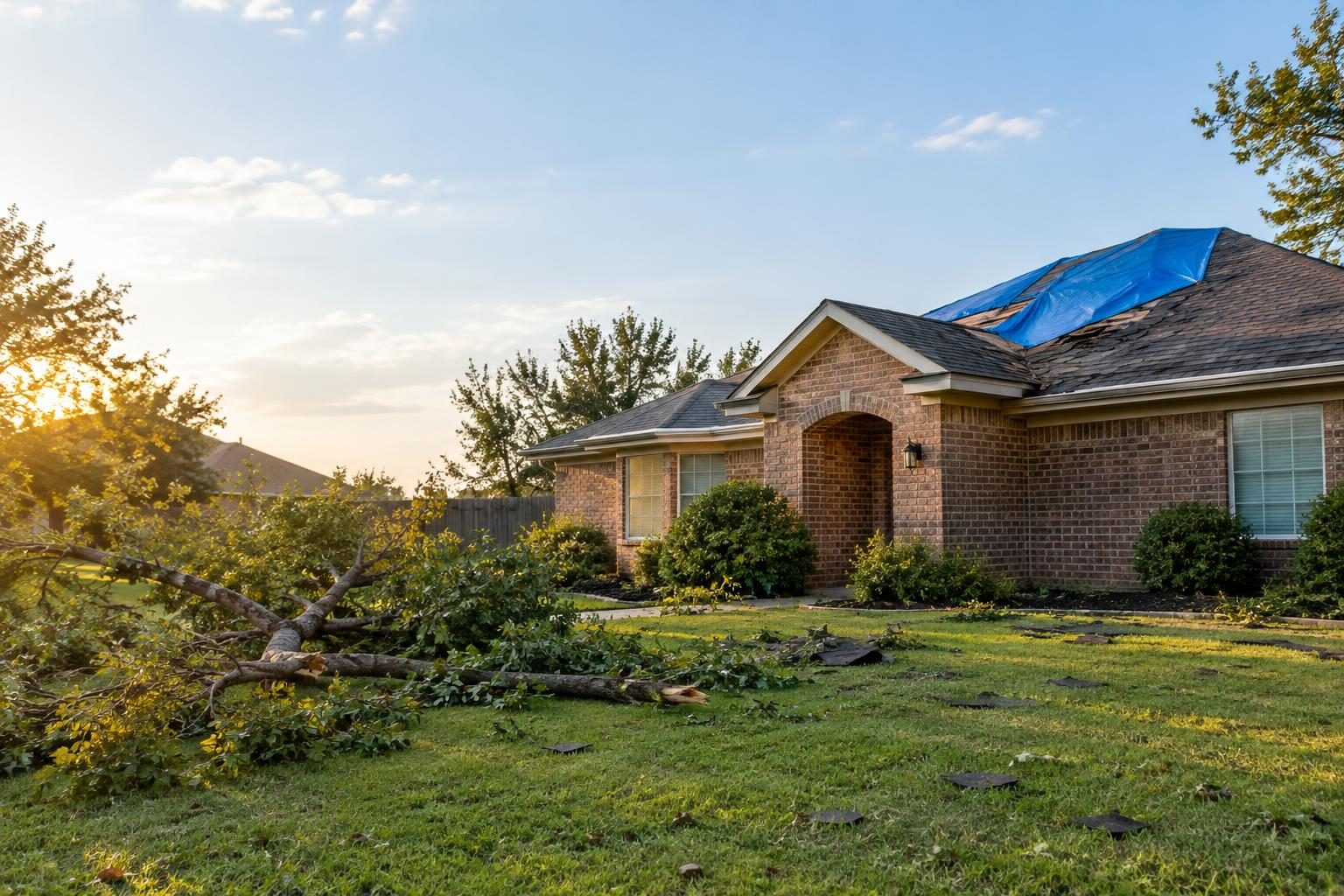
- Public adjuster firms are the companies that negotiate storm claims on behalf of homeowners, and they represent you rather than your insurer.
- Texas law requires anyone acting as a public adjuster to hold a license from the Commissioner of Insurance, and you can check that license online.
- Texas sets firm claim deadlines for insurers, so knowing the timeline helps you tell a normal wait from a stalled claim.
- Your type of coverage matters, because wind, hail, hurricane and flood damage are often handled under different policies.
Which companies actually negotiate storm insurance claims for homeowners?
Public adjuster firms are the companies built for this job. A public adjuster documents your storm damage, builds the claim and negotiates with the insurer for you.
The key word is public. The adjuster your insurance company sends works for the insurer. A public adjuster acts on behalf of the insured, as the Texas Department of Insurance explains in Commissioner’s Bulletin B-0046-08.
Other companies show up after storms too, like roofers and restoration crews. They can repair your home, but repairing and negotiating are different jobs. If you want someone to handle the claim conversation itself, you are looking for a public adjuster. You can read more about Texas public adjusters and how they work.
ClaimsMate is a Texas public adjuster firm (Texas Public Adjuster License #2326706). We are the adjuster ourselves, not a referral service, and we represent the policyholder, never the insurance company. Put simply, ClaimsMate’s expert and licensed public adjusters document the damage, prepare your claim, and negotiate with the insurance company on your behalf.
Why do so many Texas homeowners need help after a storm?
Texas gets hit hard and often, so storm claims are common and can get complicated fast. Most of us aren’t insurance claim experts, and that’s okay.
Consider the scale. The National Insurance Crime Bureau reported that Texas had 811,381 hail claims from 2016 through 2018, the most of any state. The Texas Department of Insurance data call shows Hurricane Harvey produced 764,898 insurance claims with about $19.2 billion in incurred losses. The February 2021 winter storm produced 511,473 claims and about $10.6 billion in incurred losses.
When that many claims land at once, insurers are stretched thin. Their adjusters are working fast, and some damage gets missed or scoped narrowly. That is not necessarily bad faith. It is what a surge looks like. But it is exactly when a second set of eyes on your side can matter.
How do you check that a public adjuster is legitimate in Texas?
You check the license. Texas Insurance Code Section 4102.051 requires anyone acting as a public insurance adjuster to hold a license issued by the Commissioner of Insurance.
The Texas Department of Insurance lets you look up license status on its website, as described in Commissioner’s Bulletin B-0046-08. Let’s find out what else to look for, using this checklist before you sign anything:
- Active Texas license: Confirm the name and license number on the TDI lookup, not just on the company’s own website.
- Public adjuster, not contractor: Make sure the company is an adjuster that represents you, not a repair business with a sales pitch.
- Storm experience: Ask whether they handle your type of loss, such as hail, wind, hurricane or freeze.
- A written agreement: Read it fully, and ask about anything unclear before you sign.
- Straight answers: A reputable adjuster explains the process and does not promise a specific outcome.
Our license number is #2326706, and you are welcome to verify it. If you want a longer guide to vetting, see where to find a reliable public adjuster who specializes in residential property damage.
What claim deadlines does Texas put on your insurance company?
Texas gives insurers a clear timeline, and knowing it helps you spot a claim that has stalled. These deadlines come from the Texas Insurance Code.
- Acknowledge the claim: After notice of a claim, the insurer has 15 days to acknowledge it, begin its investigation, and request the items it needs (30 business days for an eligible surplus lines insurer), under Section 542.055.
- Accept or reject: The insurer must accept or reject the claim in writing within 15 business days of receiving all items it requested. If it needs more time, it must say why and then decide within 45 days, under Section 542.056.
- Pay the claim: Once the insurer says it will pay, payment is due within 5 business days (20 business days for an eligible surplus lines insurer), under Section 542.057.
- Late payment: An insurer that delays payment for more than 60 days after receiving all requested items owes damages and other items under Section 542.060, as Section 542.058 describes.
One more date to know: a policyholder must give the insurer written notice at least 61 days before filing suit over a property claim, under Section 542A.003. This is general information, not legal advice. If your claim has been denied or lowballed, our guide on what to do after a denied property damage claim covers next steps.
Does the type of storm change who can help?
Yes, because the type of storm often decides which policy applies. Sorting that out early saves a lot of confusion.
Here are the common Texas situations:
- Flood damage: Most homeowners policies do not cover flood damage, according to the Texas Department of Insurance. Most new flood policies have a 30-day waiting period, and the National Flood Insurance Program covers a home up to $250,000 and belongings up to $100,000.
- Coastal wind and hail: TWIA covers wind and hail only, in all 14 first-tier coastal counties and parts of Harris County east of Highway 146, per the Texas Windstorm Insurance Association.
- Hail and wind inland: These usually fall under a standard homeowners policy, where disputes often center on roof scope and what counts as cosmetic damage.
- Freeze damage: Winter storms can burst pipes, which may overlap with water damage rules. See our guide on getting a fair settlement after a burst pipe.
A public adjuster can help you work out which coverage applies and document the loss accordingly. For more storm-specific help, visit our Texas Disaster Resource Center.
Frequently Asked Questions
Is a public adjuster the same as the adjuster my insurance company sends?
No. The insurer’s adjuster works for the insurance company, while a public adjuster acts on behalf of the insured, as the Texas Department of Insurance describes. Hiring a public adjuster means you have someone on your side of the claim.
Do I need a license to hire a public adjuster in Texas, or does the adjuster need one?
The adjuster needs one. Texas Insurance Code Section 4102.051 requires anyone acting as a public insurance adjuster to hold a license from the Commissioner of Insurance. You can check license status on the Texas Department of Insurance website.
How long does an insurer have to respond after a storm claim?
After notice of a claim, an insurer has 15 days to acknowledge it, begin its investigation and request the items it needs. After it receives everything it requested, it must accept or reject the claim in writing within 15 business days, with a possible extension to 45 days if it explains why.
Can I talk to ClaimsMate before deciding anything?
Yes. ClaimsMate offers a free consultation with no cost to you, and you can reach us at (877) 202-0204. We are a licensed Texas public adjuster firm (License #2326706) and represent the policyholder only.
Schedule A Free Consultation
To talk through your storm damage claim with a licensed Texas public adjuster who works for you, not your insurance company, schedule a no-cost consultation with ClaimsMate.
Sources
- Texas Insurance Code Section 4102.051
- Texas Department of Insurance, Commissioner’s Bulletin B-0046-08
- Texas Insurance Code Section 542.055
- Texas Insurance Code Section 542.056
- Texas Insurance Code Section 542.057
- Texas Insurance Code Section 542.058
- Texas Insurance Code Section 542A.003
- Texas Windstorm Insurance Association
- Texas Department of Insurance
- National Insurance Crime Bureau, August 2019
- Texas Department of Insurance winter storm data call
- Texas Department of Insurance Hurricane Harvey data call

Stephanie is a property insurance claim expert with over 20 years of experience working as an insurance adjuster, expert witness, appraiser and umpire. She is passionate about sharing her expertise, knowledge, tips and training to help both property owners and Public Adjusters in their pursuit of effectively managing claims and recovering the claim settlement they deserve after a loss.