My home suffered water damage from a burst pipe. Who can help me get a fair insurance settlement?
For a burst pipe claim Texas homeowners file, a licensed public adjuster is the professional who works only for you. Your insurer’s adjuster represents the insurance company. A public adjuster documents the full damage, reads your policy, and presents the claim on your behalf, so the settlement reflects what the loss really requires.
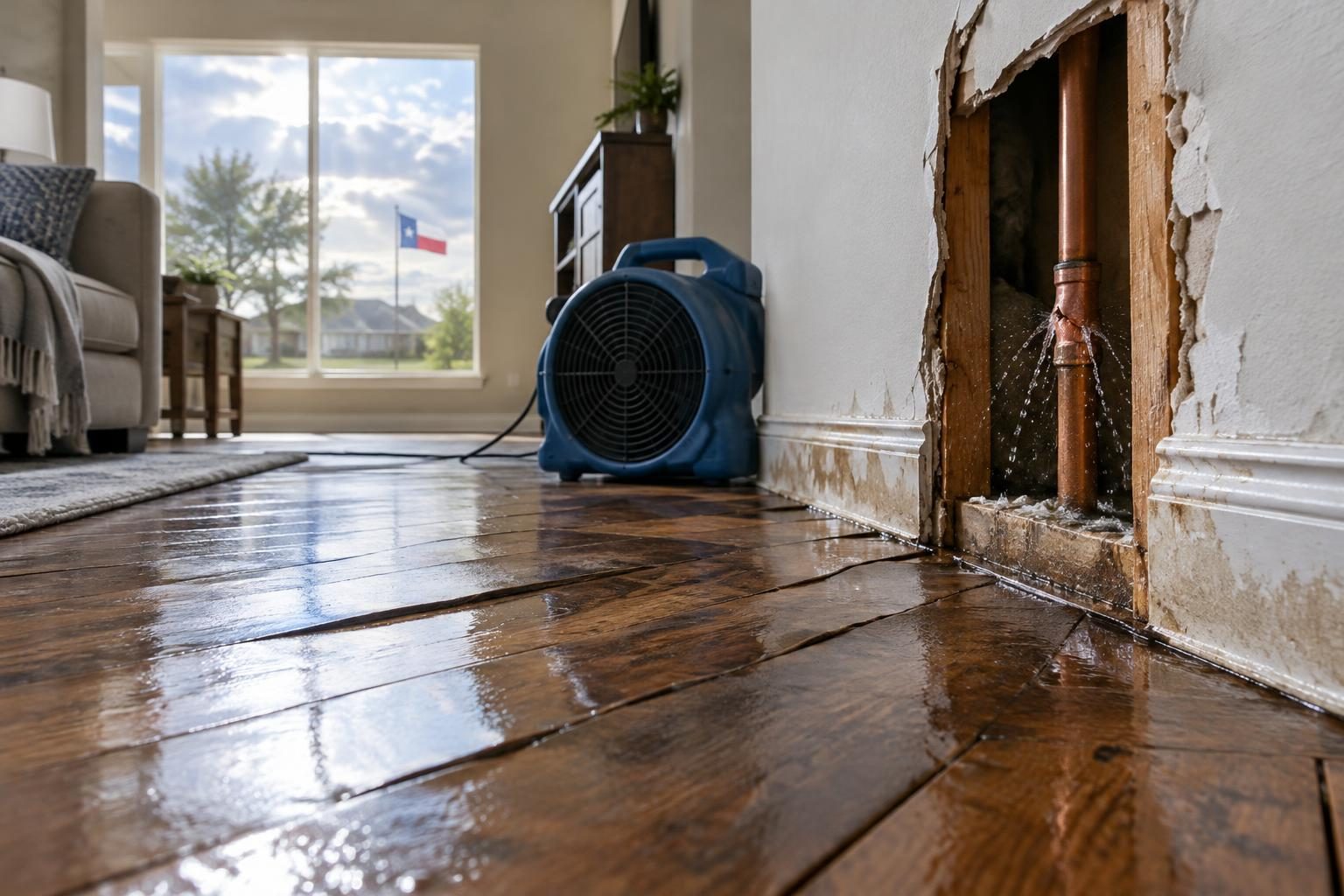
- A licensed public adjuster represents the policyholder, while the insurance company’s adjuster represents the insurer.
- Texas law sets firm deadlines for how fast an insurer must acknowledge, decide, and pay a property claim.
- You can check any Texas public adjuster’s license on the Texas Department of Insurance website before you hire.
- Documenting the damage early, including hidden water damage inside walls and floors, is the strongest way to protect a fair settlement.
Who can actually help me get a fair settlement after a burst pipe?
Several people touch your claim, but only one of them works only for you: a licensed public adjuster.
Here’s how the roles break down.
- Your insurance company’s adjuster: This person evaluates the loss for the insurer. They can be polite and professional, but their employer is the insurance company.
- A plumber or restoration contractor: They stop the leak, dry things out, and estimate repairs. They are not claim experts, and they don’t negotiate with your insurer.
- An attorney: Helpful if a dispute turns legal, but that is usually a later step.
- A public adjuster: This professional handles the claim itself on your behalf, from documenting damage to presenting it to the insurer.
Most of us aren’t insurance claim experts, and that’s okay. That gap is exactly why public adjusters exist. If you’d like to see how the role works in Texas, our page on Texas public adjusters explains it.
What does a public adjuster do on a water damage claim?
A public adjuster builds and presents your claim so the insurer sees the whole picture of the damage, not just the part that’s easy to spot.
Burst pipes are tricky because the visible mess is rarely the whole story. Water moves behind drywall, under flooring, and into insulation. A wet carpet is obvious. A soaked wall cavity is not.
In practice, a public adjuster will typically:
- Inspect the property and record damage that isn’t obvious at first glance.
- Read your policy to see what applies, and where coverage questions may come up.
- Prepare a detailed estimate of repair and replacement needs (say, flooring, cabinets, and the belongings that got soaked).
- Communicate with the insurer so you aren’t handling every call and form alone.
Insurers and their adjusters aren’t villains here. They work from their own estimates and guidelines, and two people can honestly see the same damage differently. A second set of trained eyes helps close that gap.
How do I make sure the public adjuster I hire is legitimate in Texas?
Check the license first. Under Texas Insurance Code Section 4102.051, anyone acting as a public insurance adjuster in Texas must hold a license issued by the Commissioner of Insurance.
You can confirm a license yourself. The Texas Department of Insurance lets you check a public adjuster’s license status on its website, and TDI’s Commissioner’s Bulletin B-0046-08 confirms that a public adjuster acts on behalf of the insured.
Use this quick checklist before you sign anything:
- License number: Ask for it, then verify it with TDI.
- Who they represent: A public adjuster works for you, never the insurer.
- Real adjuster, not a referral desk: Ask whether the person you’re talking to will actually handle your claim.
- Clear communication: They should explain their process in plain language.
ClaimsMate is a licensed Texas public adjuster firm (Texas Public Adjuster License #2326706), and we are the adjuster itself, not a referral service. For more on what to look for, see where to find a reliable public adjuster for residential property damage.
What should I do right now after a pipe bursts?
Stop the water, protect your home from more damage, and document everything before you clean up.
Follow these steps in order:
- Shut off the water at the main valve to stop more damage.
- Photograph and video everything before you move or throw anything away, including the broken pipe itself if you can.
- Report the claim to your insurer promptly, so the clock starts.
- Make temporary repairs that prevent further harm (say, moving furniture or running fans), and keep your receipts.
- Keep damaged items until the insurer’s adjuster has seen them, when you can.
- Talk to a licensed public adjuster before you accept a first offer or sign a final release.
Burst pipes often follow a hard freeze, and Texas has seen how big those events get. The February 2021 winter storm produced 511,473 insurance claims in Texas, with about $10.6 billion in incurred losses, according to Texas Department of Insurance winter storm data through June 30, 2022. If you’re dealing with a freeze-related loss, you’re far from alone. Our Texas Disaster Resource Center has more on storm-related claims.
What deadlines does my insurer have to follow in Texas?
Texas law gives insurers clear deadlines, and knowing them helps you spot a claim that has stalled.
Here is how the timeline works:
- Acknowledge and investigate: After notice of a claim, an insurer has 15 days to acknowledge it, begin its investigation, and request the items it needs (30 business days for an eligible surplus lines insurer), under Texas Insurance Code Section 542.055.
- Accept or reject: The insurer must accept or reject the claim in writing within 15 business days of receiving all items it requested. If it needs more time, it must say why, then decide within 45 days, under Section 542.056.
- Pay: Once the insurer says it will pay, payment is due within 5 business days (20 business days for an eligible surplus lines insurer), under Section 542.057.
- Late payment: An insurer that delays payment for more than 60 days after receiving all requested items owes damages and other items under Section 542.060, as Section 542.058 explains.
If you plan to file suit over a property claim, Texas Insurance Code Section 542A.003 requires written notice to the insurer at least 61 days in advance. This is general information, not legal advice.
And if your insurer denies or shortchanges the claim, don’t give up. Our guide on what to do after a denied property damage claim walks through your options, or you can review our best tips for burst pipe insurance claims for more information.
Frequently Asked Questions
Is a burst pipe covered by homeowners insurance in Texas?
Many homeowners policies cover sudden and accidental water damage, such as a pipe that bursts without warning. Coverage depends on your specific policy, and damage from slow leaks or lack of maintenance is often treated differently. Most homeowners policies also do not cover flood damage, which is a separate type of loss.
Can I hire a public adjuster after my insurer has already made an offer?
Yes, you can bring in a licensed public adjuster at different points in a claim, including after an offer you think is too low. It helps to talk to one before you accept an offer or sign a final release. A free consultation with ClaimsMate at (877) 202-0204 can help you understand where your claim stands.
What is the difference between a public adjuster and an insurance adjuster?
An insurance company’s adjuster evaluates the loss for the insurer, while a public adjuster represents the policyholder. In Texas, a public adjuster must be licensed and acts on behalf of the insured. Both look at the same damage, but they serve different sides of the claim.
How can I check that a Texas public adjuster is licensed?
You can check a public adjuster’s license status on the Texas Department of Insurance website. Ask the adjuster for their license number first, then confirm it there. ClaimsMate’s Texas Public Adjuster License number is 2326706.
Schedule A Free Consultation
To talk through your water damage claim with a licensed Texas public adjuster who works for you, not your insurance company, schedule a no-cost consultation with ClaimsMate.
Sources
- Texas Insurance Code Section 542.055
- Texas Insurance Code Section 542.056
- Texas Insurance Code Section 542.057
- Texas Insurance Code Section 542.058

Stephanie is a property insurance claim expert with over 20 years of experience working as an insurance adjuster, expert witness, appraiser and umpire. She is passionate about sharing her expertise, knowledge, tips and training to help both property owners and Public Adjusters in their pursuit of effectively managing claims and recovering the claim settlement they deserve after a loss.